- What is B2B Video Marketing?
- Why Is B2B Video Marketing Important?
- B2B Video Marketing Formats and When to Utilize Them
- How to Create a B2B Video Marketing Strategy
- B2B Video Marketing at Every Stage of the Buyer Journey
- B2B Video Marketing Examples and Ideas
- Where to Share Your B2B Video Marketing Content
- How to Measure B2B Video Marketing Performance
- Common B2B Video Marketing Mistakes
- How Much Does B2B Video Production Cost?
- Choosing a B2B Video Production Partner
- Let’s Make Your Next B2B Video
You’ve been receiving several sales emails with a ton of paragraphs, right? It bores me, and they must bore you as well, which is why B2B video marketing is so crucial these days because we no longer read but scan and skim through things.
Now think of short-form video explaining how to use a tool or a certain product. You will not only watch it because it saves you time but also grasp the important details.
The same applies when businesses deal with their business counterparts. Nobody wants to invest blindly, which is why every meeting or offer typically involves multiple parties and meetings.
A short but well-presented video gives all parties involved a clear view of the service you are providing, assures trust in your brand, and allows them to feel confident in going forward.
This guide covers everything about B2B video marketing, how to make one with proper planning, the cost, and whether it is effective for business or not.
What is B2B Video Marketing?
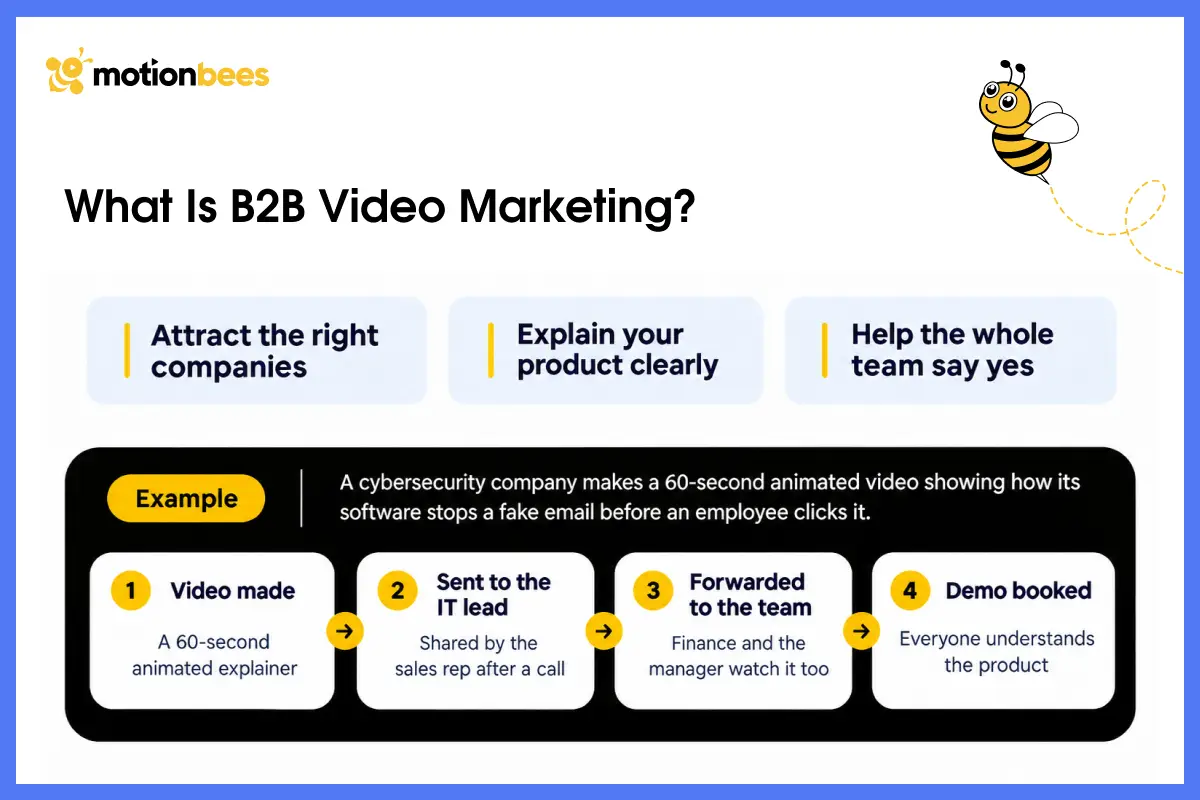
It is the process of creating short videos that sales reps send to prospects to draw in, inform, and convert. B2B video marketing includes explainer videos; videos related to product demos or customer stories. They are effective for webinars as well. This includes explainer videos, product demos, customer stories, webinars, and short videos that are sent to prospects by sales reps.
It’s different from selling to consumers. Buying a pair of shoes is quick, and you decide alone. When a company buys software, the decision might involve the person who’ll use it, their manager, someone from finance, and maybe IT. Each person has different questions, and the process can take months.
That’s why B2B video content has to build trust step by step. One video explains the problem. Other shows how you fix it. A third proves it worked for a company like theirs.
Why Is B2B Video Marketing Important?
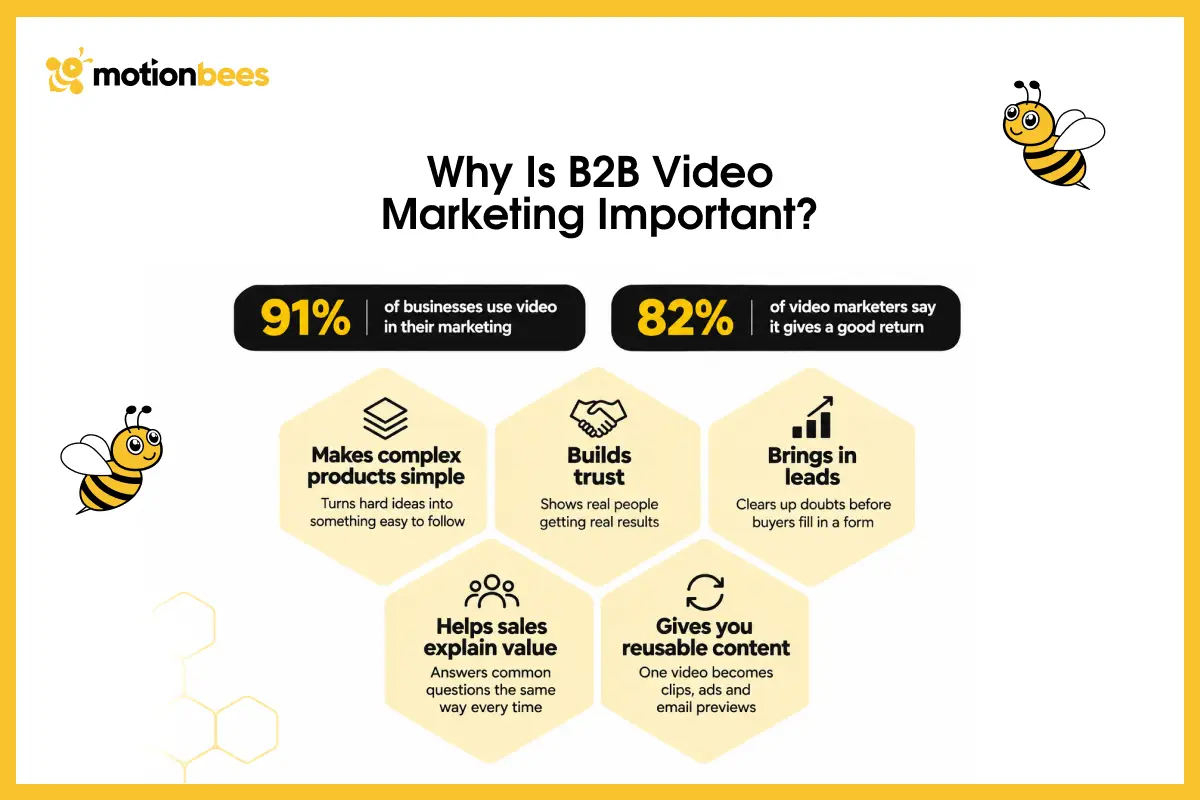
In today’s world, businesses use videos to market themselves and their product. According to Wyzowl’s 2026 State of Video Marketing report, there are 91% of businesses who use video in their marketing, and 82% of video marketers say it gives them a good return to their investment.
B2B Video Marketing Makes Complex Products Simple
As a business owner, have you ever tried explaining your product at a family dinner? Have you experienced how complex it is for a layman to understand technical aspects? B2B video marketing saves every business owner in such situations by simplifying complex information into interesting and easy-to-understand ideas.
With the use of animations and motion graphics, videos become a source of learning as well as interest. However, choosing the right animation styles matters because it helps you match the visuals to your topic. According to a study by Wyzowl, 93% of video marketers claimed that videos helped people understand their product better.
Establishes a Bond with the Buyer
Choosing the wrong supplier can cost a buyer money and leave a negative impression in the workplace. So, they want proof. They want real people and real results, in the form of customer testimonials, case studies, and expert interviews. A product demo shows your tool in action, not just a promise.
Supports Lead Generation
That’s where video marketing for lead generation comes in. A short video on the landing page can help ease the doubts that stop users from completing your forms. Webinars allow you to attract people who want to sign up. Video sales letters guide people through an offer and lead them to one action.
Supports Sales Teams in Explaining Value
Sales reps face the same questions over and over. B2B sales enablement videos, such as product walkthroughs, provide a consistent response to questions and concerns. A personal video from a rep also stands out in a crowded inbox and is easy to forward to the rest of the team.
Provides Content You Can Reuse
A good video can fuel your channels for weeks. A three-minute explainer video can be broken down into a LinkedIn video, a vertical ad, an email preview, and a video on your service page.
B2B Video Marketing Formats and When to Utilize Them
Each video has a purpose. Choose it based on your goal and where the buyer is in the purchasing decision, not on what looks flashy.
| Type of B2B Video | Main Purpose | Best Stage |
| Explainer videos | Make a product or service easy to understand | Awareness |
| Product demo videos | Show features and how they work | Consideration |
| Customer testimonial videos | Build credibility | Consideration |
| Case study videos | Show real results and business value | Decision |
| Video sales letters | Present an offer and push action | Conversion |
| Brand story videos | Share your values and what makes you different | Awareness |
| Educational videos | Answer questions and show expertise | Awareness and consideration |
| Onboarding videos | Help customers learn the product | Retention |
| Personalized sales videos | Speak to one prospect’s needs | Decision |
B2B explainer videos work well when the buyers understand their problem. Only then can they relate to brand stories, or they come up with a product that solves buyers’ issues. If you’re new to the format, start with how to make an explainer video, learn what makes explainer videos that convert, and look at a few explainer video examples for ideas.
Once this is done, demos and testimonials then help buyers compare the benefits or results, and case studies calm last-minute nerves. Here, a VSL is involved as it works best when you have one clear offer.
Not sure which video fits your goal?
We’ll help you pick the right format for where your buyers are right now.
How to Create a B2B Video Marketing Strategy
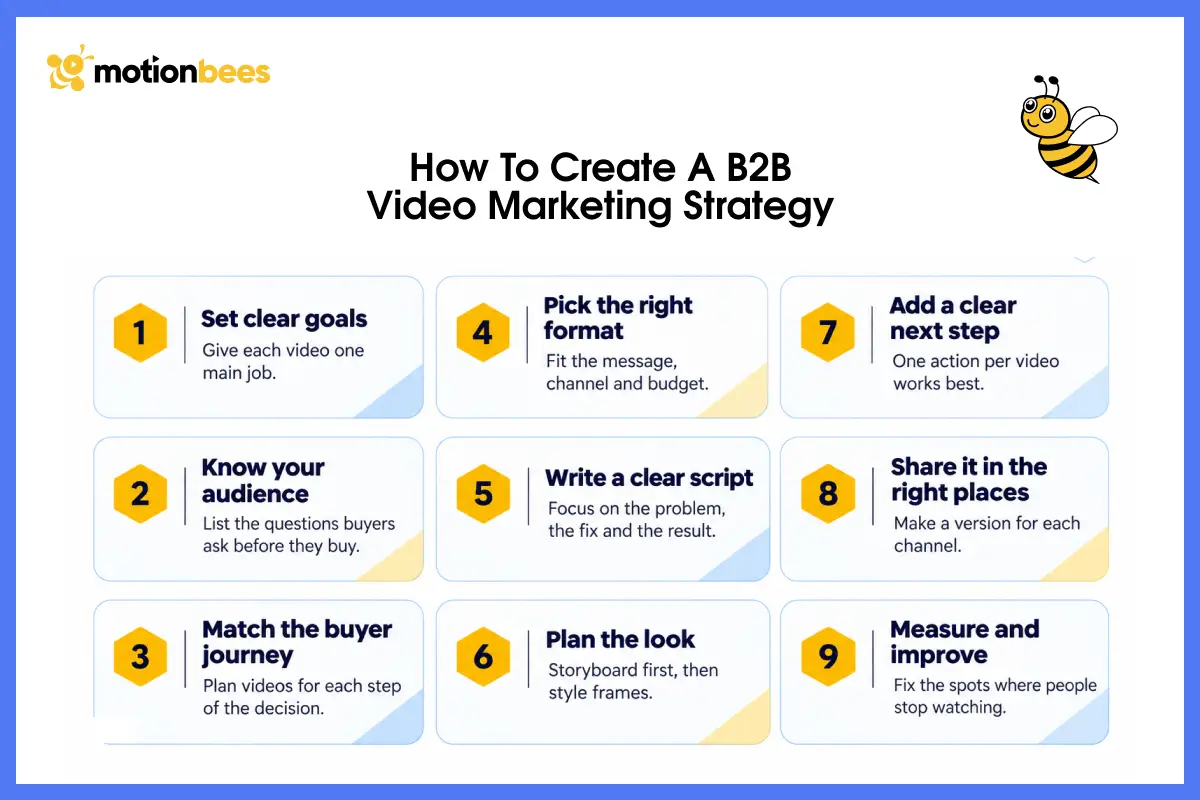
Making a video without a plan is comparable to packing for a vacation without a plan or a map. Here are nine steps that will provide direction for your B2B video marketing strategy.
Set Clear B2B Video Marketing Goals
Before you begin, you should determine what you want your video to accomplish. Some videos are designed to attract the attention of buyers who don’t know you yet, and others will convert interested users into leads.
There are videos that can assist your sales team to close sales, while others assist customers in maximizing your product to ensure that they continue to be with you.
If you can, give every video one specific goal. This goal will inform everything from writing the script to measuring success.
Know Your Audience
Things like cost, risk, and results are important factors for any decision-makers. Whether the video is easy or not is an important concern of the people using the product. Get feedback from your sales team about what prospects want before making a purchase. These questions often result in the best video ideas.
Match Videos with Buyer Journey
The first thing buyers will seek is a problem-driven solution. Afterwards, they discuss options and ultimately, they want to know you’re the safe bet. Make videos that show all steps, not only the significant ones.
Choose The Appropriate Format
Be sure the format matches your message, audience, channel, and budget. A difficult procedure often leads to an effective animation video. For instance, a customer story is more authentic on camera. Also, LinkedIn is a platform for short videos with captions.
Write a Clear Message and Script
Include one key message, including a customer problem, solution, and stated benefits. You must use a language that buyers easily understand and relate to. Videos with engaging storytelling keep viewers hooked till the end. Also, read your script out loud, and if it sounds too stiff, rewrite it all over again.
Plan How It Will Look
Begin with a storyboard that relies on basic sketches of each scene that will be displayed to everyone to see what is going to happen and in what order before any real work is done. Once the story is locked in, make style frames which provide a sense of colors, characters, and overall style of the final video. Ensure that the look and feel are uniform throughout all videos and your brand is known to customers wherever they are.
Likewise, if you know the steps involved in the entire animation process, you can save a bit of time in giving feedback.
Include Compelling CTAs
Communicate to the audience what they should do next. There should be a prominent and compelling call to action throughout each stage that encourages viewers to download a guide, sign up for a free trial, schedule a demo, or request a consultation session. Too many CTAs are not really the best idea.
Share Videos in the Right Places
Before making a video, decide which platform you are making it for. Each platform requires a different version. A LinkedIn-worthy video won’t do well in an email or paid advertisement.
Measure Your B2B Video Marketing Results
Where do people stop watching? Which videos lead to sign-ups? Which ones does your sales team actually send? If people leave early, fix the opening. If they watch but don’t click, make your next step clearer.
Have a video idea but no script yet?
We’ll turn it into a clear script and storyboard your buyers will get.
B2B Video Marketing at Every Stage of the Buyer Journey
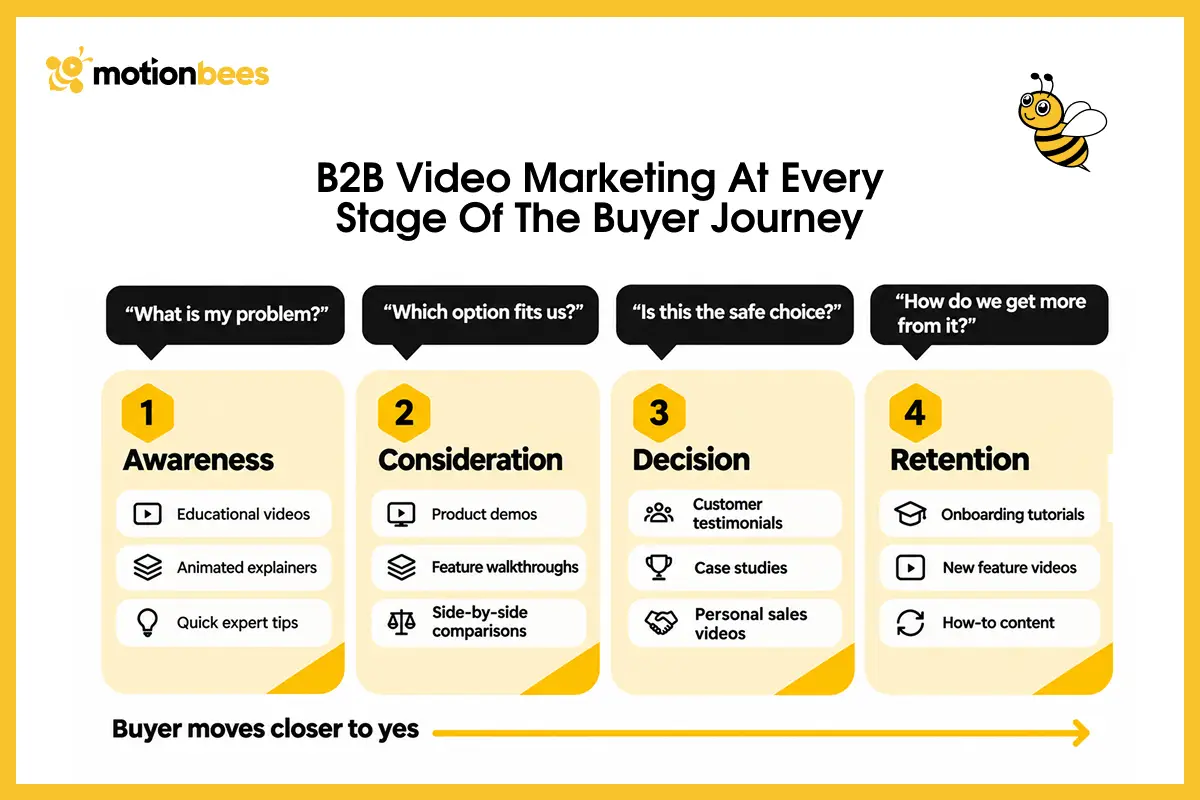
Awareness: Help Buyers See the Problem
At this point, buyers might not know a fix exists, so don’t sell yet. Teach. Short educational videos, animated explainers, and quick expert tips work best. A delivery software company could show in 60 seconds how planning routes by hand wastes fuel and driver hours.
Consideration: Help Buyers Compare
By this stage, prospective purchasers are doing a bit of comparison shopping and considering multiple alternatives. They’ve got product demos, feature walkthroughs, side-by-side comparisons, and explanations from experts to help them determine if you’re the right fit. If possible, demonstrate the actual product; preferably with the tools they use daily.
Decision: Remove the Last Doubts
The buyer’s primary fear is now that he or she has made the wrong selection. Testimonials and case studies help alleviate that fear by assuring companies like yours were successful with real results. Also, a setup walkthrough is helpful; it will give them an idea of what the first few weeks will be like after they sign. Then, a personal video from a salesperson can address the particular queries raised in the previous meeting.
Retention: Help Customers Get More Value
Your work doesn’t end once the contract is signed. Tutorials, videos on new features, and simple how-to information enable customers to get more value from your product. If they recognize that value, they will be much more inclined to renew and throw you an endorsement for future reference.
B2B Video Marketing Examples and Ideas
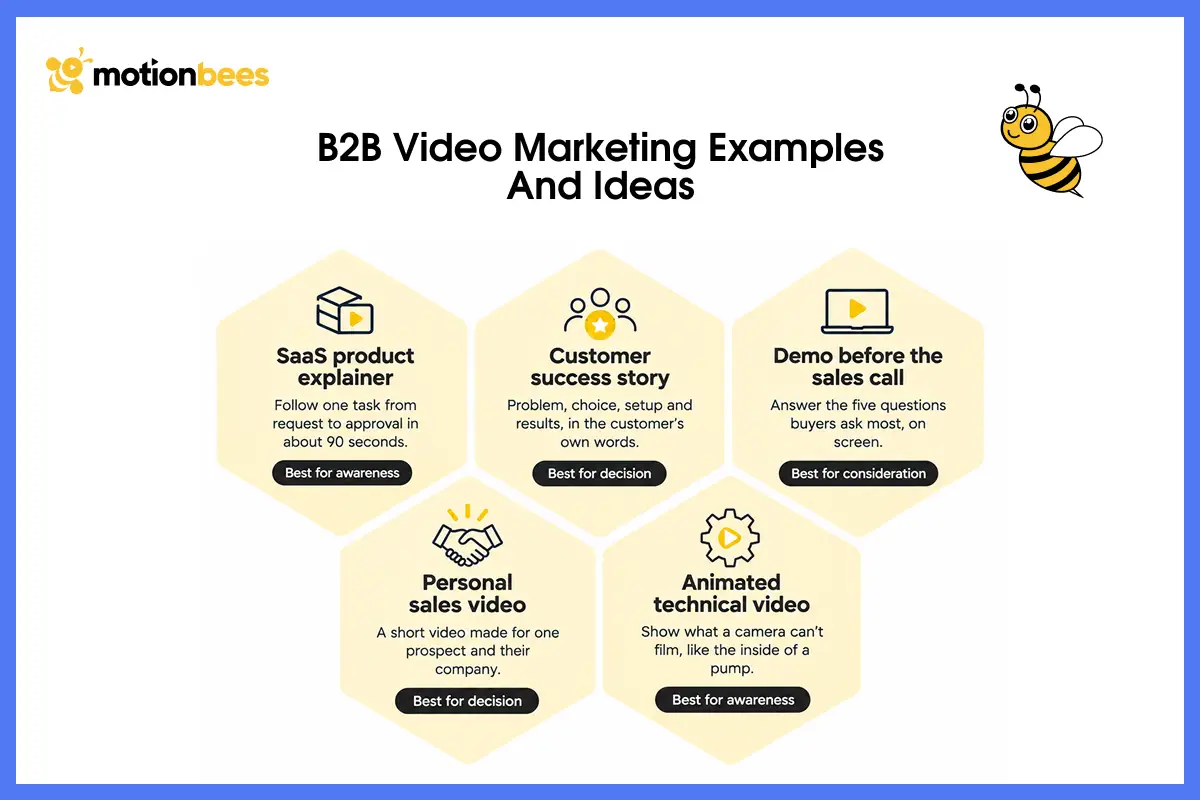
Below are a number of B2B video marketing examples that you can mold to suit your own business.
SaaS Product Explainer
Suppose that you have a project management application and you want to show your potential clients how the app saves time and mental exhaustion. For this, a 90-second explainer video can do wonders. It can show the client how a single request is processed from start to end within seconds and how the app handles the entire process without any confusing email threads.
Dropbox did it first by making a basic explainer video that explained how file syncing works even when most people had no idea what it was.
Customer Success Story
Build the story in four parts:
● The problem: what wasn’t working for them.
● The choice: why they picked you.
● The setup: how getting started went.
● The results: real, confirmed outcomes, like time or money saved.
Let the customer tell it in their own words, and only share numbers they’ve approved. Salesforce does this well, with customer story videos across many industries.
Product Demo Before the Sales Call
Ask your sales team for the five questions prospects ask most in first meetings. Make a short demo that answers each one on screen. Send it before the call so the meeting can skip the basics.
Personal Sales Video
A rep records a short video for one prospect, mentioning their company and one useful idea. Keep it under two minutes. It feels far more personal than another plain email.
Animated Technical Video
You can’t film liquid moving inside a pump or data passing through a security system. Animation can. Clean motion graphics work well for data and software, while other types of animation like 3D suit machines and physical products.
Where to Share Your B2B Video Marketing Content
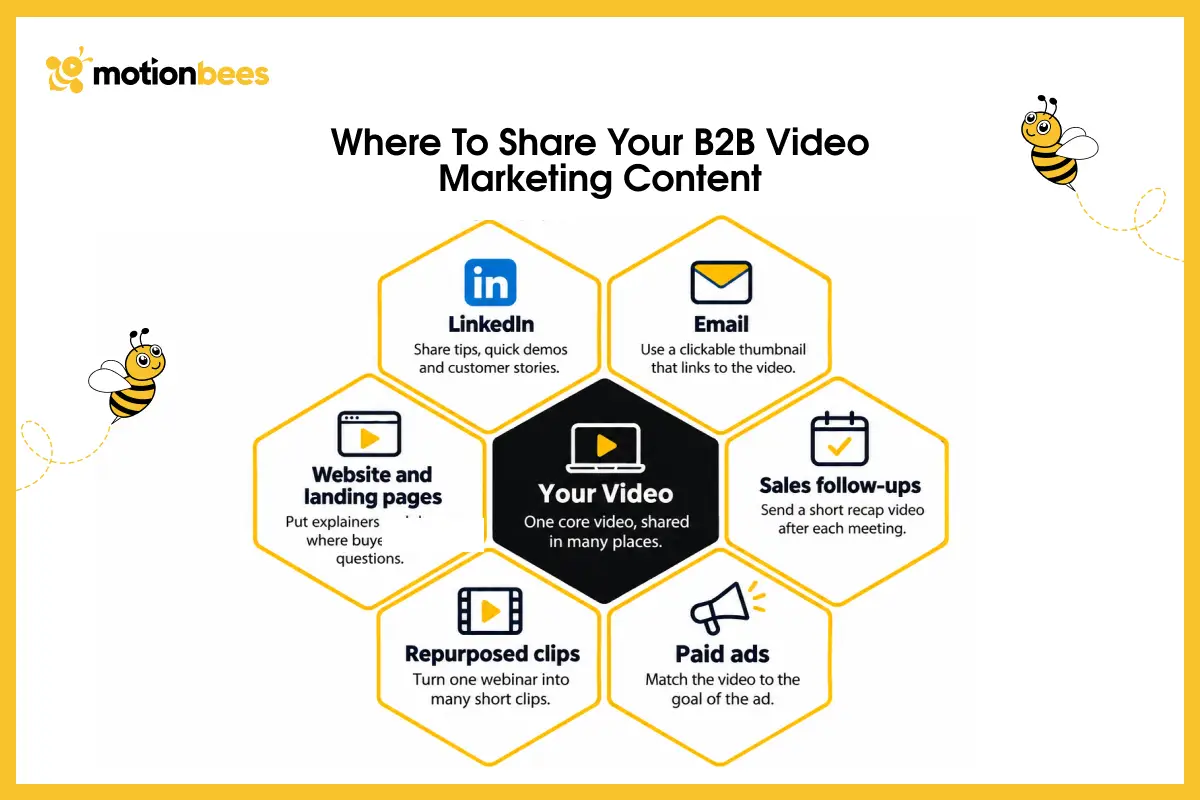
Website and Landing Pages
Put videos where buyers have questions. Explainers go on service pages, demos on product pages, and short testimonials next to your contact form.
B2B LinkedIn Video Marketing
Many business buyers are active online for job seeking on LinkedIn. Provide tips, industry knowledge, short demos, and customer stories. Put subtitles in the videos, since many people watch them with the audio muted.
Email Marketing
Display a thumbnail image with a play button that points to a full video on your site. Follow-up emails are the perfect place to include personal videos or even demo links.
Sales Meetings and Follow-Ups
Videos respond to frequently asked questions and support proposals. After the meeting, a brief recap video keeps colleagues informed about the meeting they missed.
Paid Ads
Connect the video with the goal of the ad. Cover all your bases by using problem-focused clips to connect with new people, demo or testimonial videos for those who already visited your site, and offer-focused videos to seal the deal.
Video Repurposing
A 40-minute webinar can be broken down into several short snippets, a highlight reel, and a blog post. Maximizes the value of each shoot by converting lengthy recordings into short-form content.
How to Measure B2B Video Marketing Performance
Compare and contrast each video according to its purpose. Don’t use the same metrics to evaluate a brand video versus a sales video.
| Goal | What to Track |
| Awareness | Reach, impressions, views from the right audience |
| Engagement | Watch time, how many people finish, comments and shares |
| Lead generation | Landing-page sign-ups, quality leads, conversion rate |
| Sales support | Demo views, how often reps use the video, its role in sales calls |
| Revenue | Deals the video helped start, value of potential deals, revenue from closed deals |
Views alone don’t tell you much. A video seen by 500 of the right decision-makers can be worth more than one with 50,000 random views.
Be fair about credit, too. Buyers usually read emails, join calls, and see ads before they buy. A video can play a big part without being the last thing someone clicked, so check how often your videos show up in deals you’ve won.
Common B2B Video Marketing Mistakes
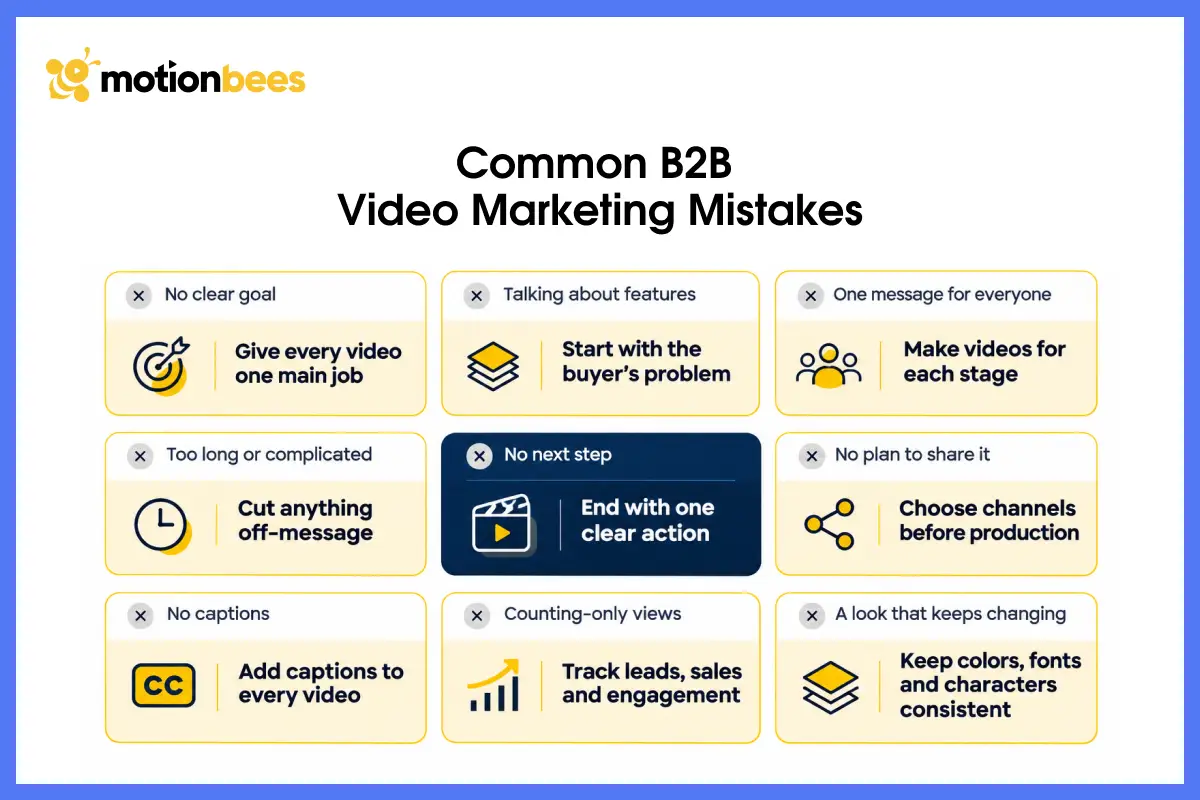
No Clear Goal
Many businesses create a video simply because their competitors have one. Without a clear purpose, though, it is hard to know whether the video is working. Decide what you want it to achieve before production begins.
Talking About Features Instead of Problems
Buyers are focused on their own challenges, not on your product. Start by addressing the problem they face, and then show how your solution helps them overcome it.
Using One Message for Everyone
A first-time visitor needs different information than a buyer who is ready to sign. A single video that tries to speak to both often fails to connect with either. Create separate videos for each stage of the buying process.
Making It Too Long or Complicated
Viewers lose interest quickly when a video takes too long to reach its point. Keep the content focused, and remove anything that does not support your main message.
Forgetting the Next Step
Interested viewers still need guidance on what to do next. End each video with one clear action, such as booking a demo or downloading a guide.
No Plan to Share It
Even a well-made video will not help your business if your audience never sees it. Plan where the video will be published and promoted before production starts.
Skipping Captions
Many professionals watch videos without sound, especially at work or on mobile devices. Some viewers cannot hear the audio at all. Captions make sure your message reaches everyone.
Counting Views Instead of Results
A high view count does not always reflect business impact. Leads, sales, and customer engagement give a much clearer picture of how well a video is performing.
A Look That Keeps Changing
When each video uses a different style, your brand becomes harder to recognize. Consistent colors, fonts and characters help buyers remember you across every channel.
Following proven basics like the 12 principles of animation also keeps movement smooth and natural.
How Much Does B2B Video Production Cost?
Asking what a video costs are a bit like asking what a house costs. It depends on what you need. These are the main things that shape the price of B2B video production:
| What You’re Paying For | Typical Cost |
| A 60-second explainer video | $2,500 to $10,000 on average |
| Hiring a freelancer | $500 to $3,000 for each minute of video |
| Hiring a studio | $3,000 to $10,000 for each minute of video |
| 2D animation | $5,000 to $15,000 for each minute at an established studio |
| 3D animation | $15,000 to $30,000 or more for each minute at an established studio |
| Writing the script | $500 to $3,000 |
| Storyboards and style frames | $1,000 to $5,000 |
| Adding another language | $300 to $1,000 for each minute, per language |
| Extra rounds of changes | $500 to $1,500 for each extra round |
| Writing the script | $500 to $3,000 |
| Extra rounds of changes | $500 to $1,500 for each extra round |
| Rushed deadline | Every agency provides different price quotes for urgent projects |
| Making the video longer | Around 1.5 times the 60-second price for each extra minute |
That’s why explainer video cost and 2D animation cost can vary so much between projects. Decide your goal, length, and channels first, then ask for a quote.
Choosing a B2B Video Production Partner
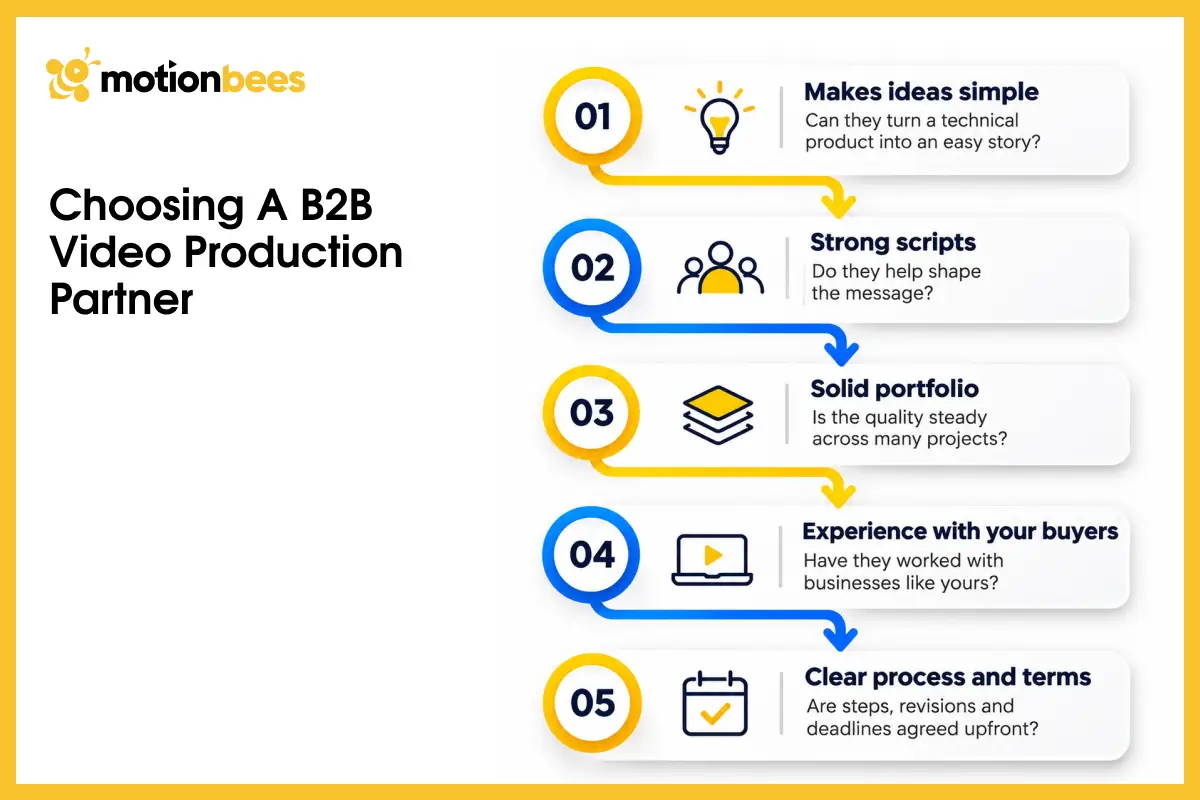
The right partner understands both video and the people you sell to. Look for the following:
● Find out if they have previous experience with buyers like you or have, they worked with businesses like yours.
● Find out if they have a knack for making things simple. For instance, can they turn a technical product into a story anyone can follow?
● Look for strong scripts and storytelling to see if they help shape the message, or only produce what you send.
● A solid portfolio or quality projects across many industries.
● A clear process to see if they know what happens from first call to final delivery.
● Clear communication regarding revision rounds, deadlines, and file types.
● Ask if they can deliver different versions for your website, LinkedIn, ads, and sales team.
Motionbees works with businesses that need explainer videos, animation, and other branded videos. Every project starts with a clear script and storyboard, so even complicated products become simple stories your buyers will actually watch.
Conclusion
Good B2B video marketing doesn’t start with a camera. It starts with a question your buyer is asking. When every video answers the right question at the right time, and you track what it achieves, video stops being a cost and starts bringing in leads and sales.
You don’t need ten videos to get started. Find the spot where your deals get stuck most often. Make one video that fixes that gap, see how it performs, and build from there.
Let’s Make Your Next B2B Video
Ready to market your product through B2B videos that buyers understand? Tell us about your project, and we’ll send you a clear yet distinct plan with a production quote.
It’s using video to attract, educate, and win over business buyers through a longer buying process with several decision-makers.
It depends on your goal and the buyer’s stage. Explainers help early, demos help buyers compare, and case studies help them decide.
Helpful videos attract the right people. Landing-page videos and demos answer their questions, and a clear next step, like booking a call, turns that interest into a lead.
Yes. It makes complex products and ideas easy to understand, and it’s simple to update when your product changes.
It depends on the message and the viewer. Social clips and explainers are usually short, while demos and webinars can run longer. In Wyzowl’s 2026 survey, 71% of marketers said videos between 30 seconds and two minutes work best.
Compare what you spent making and promoting the video with the leads, deals, and revenue it helped bring in.
It depends on your goals, how many videos you need, and the style. Start with one clear goal, then grow your budget once you see results.

Hafsa Hanif is a talented content writer at Motionbees, Webnhubs and Artisticore specializing in topics such as graphic design, web design and development, logo design, and animation. With her deep understanding of design principles and creative processes, Hafsa crafts engaging, informative, and SEO-optimized content that resonates with readers. Her expertise in SEO ensures that her articles not only captivate audiences but also rank well on search engines, helping businesses boost their online presence through compelling design-focused narratives.
