- What is Visual Storytelling?
- How Visual Storytelling Works
- The Art of Telling Stories With Pictures (Not Words)
- Why Is Visual Storytelling Important?
- Key Elements of Visual Storytelling
- Common Visual Storytelling Mistakes You Should Avoid
- 5 Great Visual Storytelling Examples for Inspiration
- Get Started With Motionbees to Tell Your Story With Animations
Visual storytelling is among the best ways to share ideas, emotions, and messages without uttering a single word. Think of the videos you like. They evoke emotions, don’t they? This is the impact of visuals.
They draw your attention instantly. More so, they paint the whole picture when you look at them and remain in your memory ever since.
This is the magic of visual storytelling. These days, people scroll nonstop on their phones. And therefore, having good visuals that can stand out is a must.
Your visuals must tell the whole story right away. This helps brands compete with content creators who thrive on storytelling.
That is why we will talk all about what is visual storytelling in this blog. More so, we will discuss how it works and look at some great visual storytelling examples.
So, without any further ado, let’s get right into it.
What is Visual Storytelling?

First things first, let’s discuss the elephant in the room, which is the visual storytelling definition. Visual storytelling is the art of conveying a message and evoking feelings by means of pictures, videos, and animations.
It is a language of visuals that consists of colors, shapes, compositions, and fonts. All these combined in a single form lead the viewer through a story from start to finish.
Thus, it transforms information into a memory. This way, the information is easy to recall. It is done so with various media. These are photos, illustrations, animations, or infographics. All in all, visual storytelling is the one that gives birth to the ideas.
The process starts by grabbing people’s attention. It then makes things clear and establishes an emotional connection. All of this is done without saying a word whatsoever.
Hence, this is the reason why it is used by brands, creators, and artists these days. The power of visual storytelling makes it one of the best ways to communicate with people.
Ready to Bring Your Story to Life With Stunning Animations?
How Visual Storytelling Works
Visual storytelling works due to the fact that our brain is wired in a way that it can decode narrative images much quicker than text.
A picture or a video shows, and the person’s brain is already on the same wavelength. Therefore, it creates a stronger memory. This is the reason visual storytelling is fit for a lot of things.
These include informing people about topics, branding, or raising awareness, for that matter. More so, it is used for making people feel something that encourages them to take action.
Throughout the ages, humans have always used visuals to tell stories. It goes back all the way to cave paintings and symbols. And these days it is done via movies, animations, memes, and infographics.
In whatever way the story is told, the visual medium ensures that the audience gets the message right away and keeps them involved.
This is why visual storytelling still commands such a strong position in today’s communication.
The Art of Telling Stories With Pictures (Not Words)

The art of narrating through images is akin to making a silent movie in someone’s brain. To put it simply, instead of you speaking, you rely on a picture to do the talking for you. The picture will convey feelings, actions, and meanings.
A single image can communicate feelings such as excitement, fear, or joy much faster than a whole paragraph ever could.
The skill is in the selection of the images that are self-explanatory. Also, the right angle, colors, characters, or setting can totally determine the mood of the story.
Comics, cartoons, and illustrations in books for children are the primary factors that attract such a wide audience.
They transform the narrative into a reading that is not only easy but also fun to watch.
When visuals are used with a purpose, they can convey a message that is even greater than that of the spoken or written words.
Why Is Visual Storytelling Important?
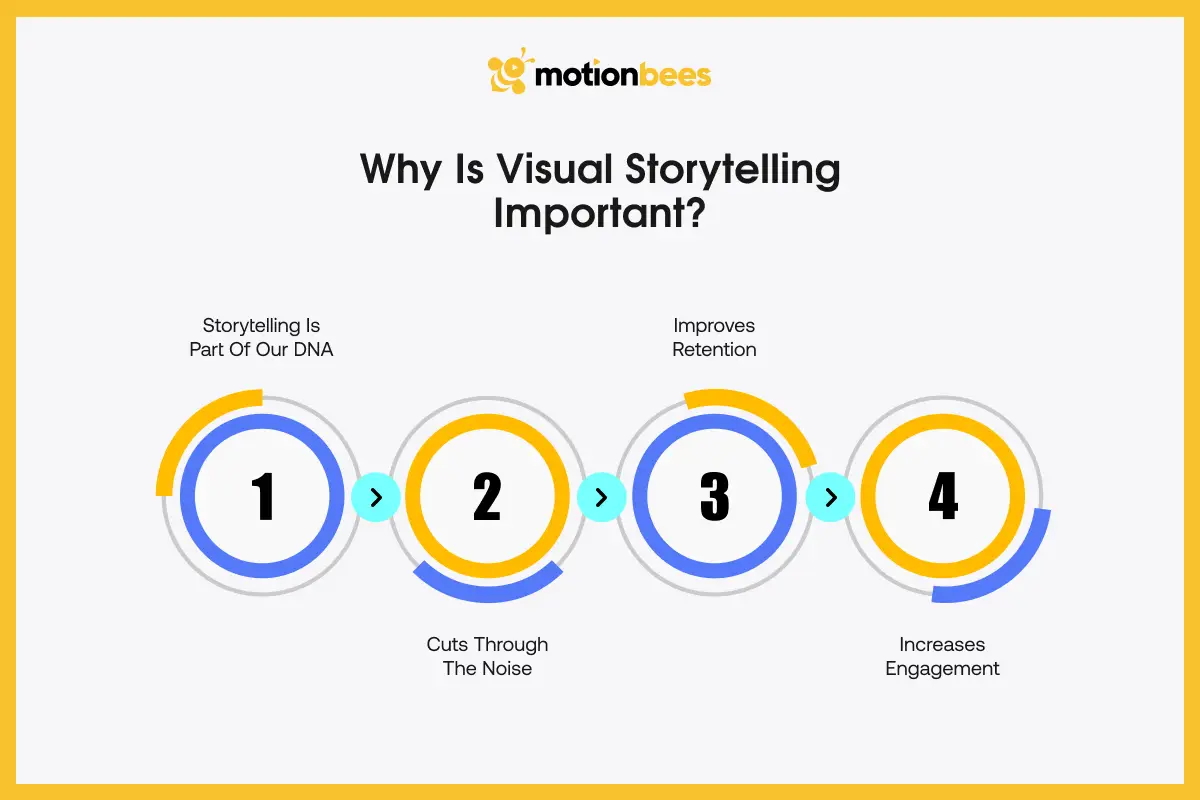
Visual storytelling matters for a lot of reasons. Here’s why visual storytelling is important:
Storytelling Is Part of Our DNA
Telling stories is a practice that goes back to the beginning of human history. The people who lived long before us passed down stories to us. They did so by means of cave drawings, talking, and writing.
One of the functions of stories is to facilitate the communication of human experiences and the understanding of the world.
Visual storytelling is one of such ancient instincts. It brings images and videos into the play as a means to convey ideas swiftly. It does so in a way that seems natural and captivating to everyone.
Cuts Through the Noise
These days, we see hundreds of texts on a daily basis. Visual storytelling contributes to the distinction of your message.
An image or a short animation that is good can get the attention right away. Thus, it will make people stop and look it over.
However, unlike lengthy text, visual aids make a quicker approach to the core of the matter. And thus your narrative is made to be seen and remembered.
Improves Retention
It is a known fact that the human brain remembers visuals much better than just words. The use of images, graphics, or videos certainly prolongs the stay of the information in the memory.
Thus, your concepts become more easily retrievable and communicable. This proves great and beneficial in many areas.
These areas could be those of learning or marketing. All in all, it increases the impact of your message.
Increases Engagement
Visual storytelling is an invitation for interaction, comments, and sharing. The audience is engaged through attractive images, videos, or animations.
The more your story looks attractive, the more people will connect with it. More so, people will engage with it. They will also spread it around town. This way, your message will get attention.
Key Elements of Visual Storytelling

Great storytelling is much more than good visuals. Therefore, these are key elements that make visual representation examples great:
A Clear Message
Every visual story starts with a clear message. Before adding graphics or colors, know what you want to say.
A clear message guarantees that the audience gets your story very fast. If it’s not clear, then pictures may confuse people. Therefore, if the message is simple, the story can be effective.
Design
Great digital storytelling examples look neat and nice to look at. More so, they are structured well. It directs the viewer’s interest to the key points.
When design is considered, using balance, spacing, and attractive visuals makes it easy for people to stick to the topic.
This removes the risk of people losing track of the story. Powerful storytelling design gives a smooth and clear understanding of everything.
Want Animations that Grab Attention and Inspire Action?Get Custom-Made Animated Videos Designed Just for Your Brand!
Entertainment
Visual storytelling methods are most effective when they are entertaining to the audience. Entertainment is the one thing that keeps people interested.
People look for fun for the sake of being happy. They see videos, play Video Games, watch movies, or whatnot just to be amused.
And when storytelling is done in a fun way, it makes the whole viewing experience a good one. Creativeness in storytelling can be brought forth in many ways.
It can be added in the form of humor, great personalities, or thrilling events. More so, adding entertainment, such as making it lively and exciting, keeps people interested.
When a story becomes animated and fun, it will be watched till the last minute. And the chances of a fun video being remembered are much higher than one that is not. It is as simple as that..
Visual Hierarchy
Visual hierarchy refers to the arrangement of elements in such a way that the viewers get to see the most important ones, and then the less important ones, and so forth.
This is done in a number of ways. It could be done by changing sizes, colors, or positions.
This way, the story flows in an uninterrupted manner. It helps viewers know what the story is. Good visual hierarchy keeps a message to the point.
Color and Typography
Colors and fonts are not just used for aesthetic purposes. Instead, they are also used for setting the vibe of the story.
Vivid colors can stir up feelings. On the other hand, gentle ones can make things calm. Likewise, large typefaces can point out the most important things.
The selection of the proper mixture assists in the expression of feeling and the support of your brand. More so, it makes your narrative attractive and easy to read visually.
Interaction With the Audience
The best visual stories are those that the audience participates in because they become more connected that way.
This can be done via interactive questions or by sharing the audience’s own experiences through the characters depicted. Or it can be done by creating situations that cause the viewers to think or react.
All these help in building connections. This makes the story more profound. When viewers realize they are a part of the story, they tend to be more involved. This way, the message is more likely to stick with them.
Common Visual Storytelling Mistakes You Should Avoid
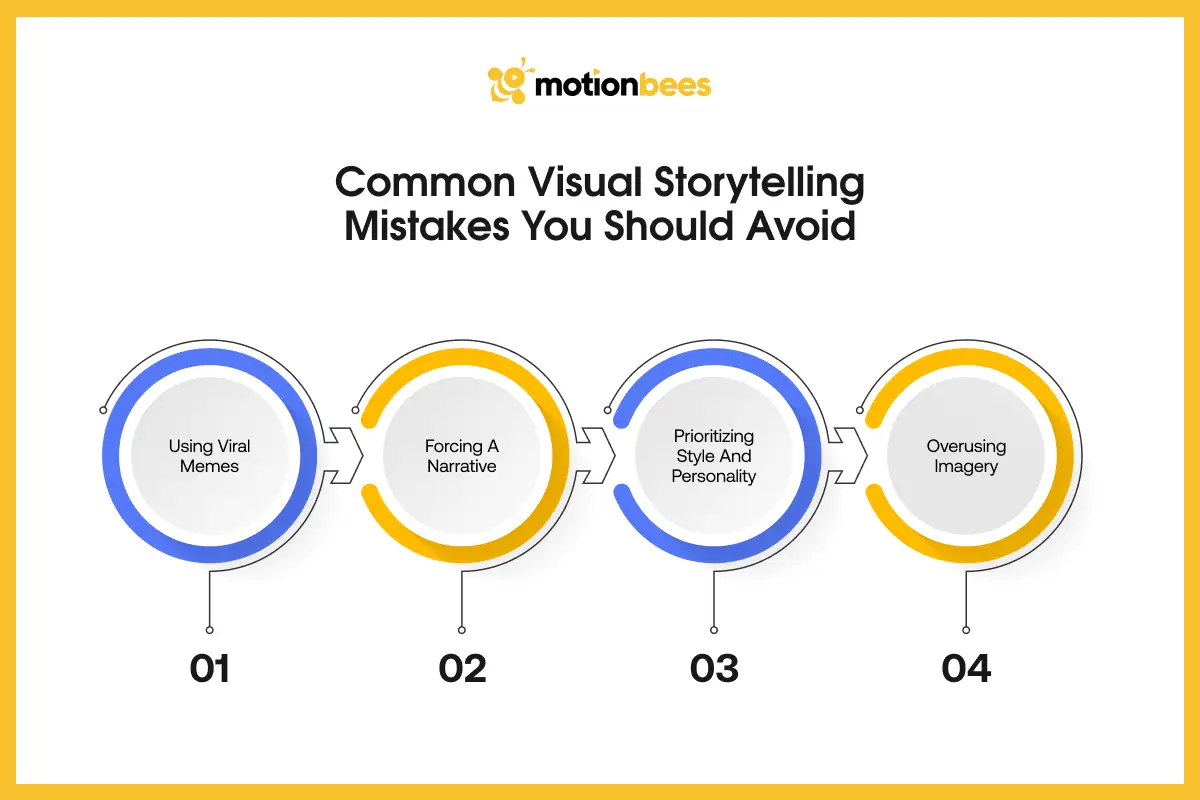
Even the best visuals can fail to tell a story if they are not used right. Therefore, here are a few common mistakes you need to avoid with visual storytelling:
Using Viral Memes
Memes are funny, not gonna lie. But at times, they may not express the message you want to convey. They can also give the impression of being unprofessional or get outdated over time.
If your visual narrative highly relies on memes, it might get the point across very quickly. It is advisable to make visuals that are original, have a longer life span, and are closer to your narrative.
Forcing a Narrative
Every now and then, creators make the mistake of trying too hard to narrate a story. And the final outcome feels either fake or unclear.
The audience does not connect with a fake plot since it is not like real life. The visual narrative examples should be the result of the communication and feeling that you aim to convey.
Being simple and candid gives your story more of a chance to be understood.
Prioritizing Style and Personality
Aesthetics is a good thing, no doubt. But it should never be more important than the content. If the visuals are too much about being fashionable or showing one’s personality, then the meaning is likely to be lost.
What is important is to have a nice mixture of creativity and clarity. The first thing that matters is a good story.
Other than that, the style should be there to support the story. It must not be there to take away the attention from the story.
Overusing Imagery
Overloading your audience with images or graphics can be a drawback. It will also lead to confusion in the story.
Therefore, each visual should have a purpose. More so, you must focus on quality, and not quantity. This way, the story’s message will shine. In the world of visual storytelling, less means more.
5 Great Visual Storytelling Examples for Inspiration
There are many different types of storytelling forms. Therefore, the following are the best visual storytelling examples:
Animations
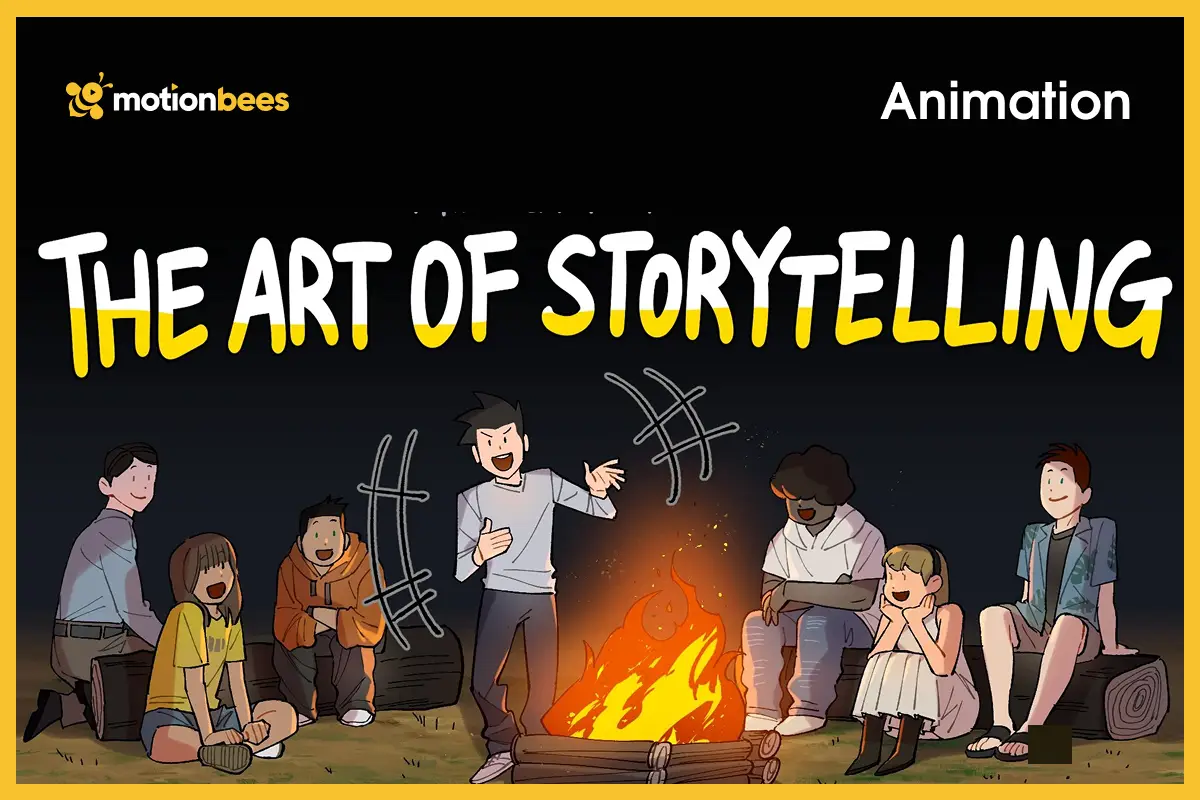
Animations are one of the best visual storytelling examples. They bring tales to life. They do so using movement, color, and characters that are able to express feelings.
Therefore, they are a great way of conveying ideas in a playful manner. Be it a brief Explainer Video or a creative motion graphic, animations make the process of conveying information easy.
And at the same time, they make it more thrilling to see. That is why they stand among the most powerful types of storytelling methods.
Video Storytelling
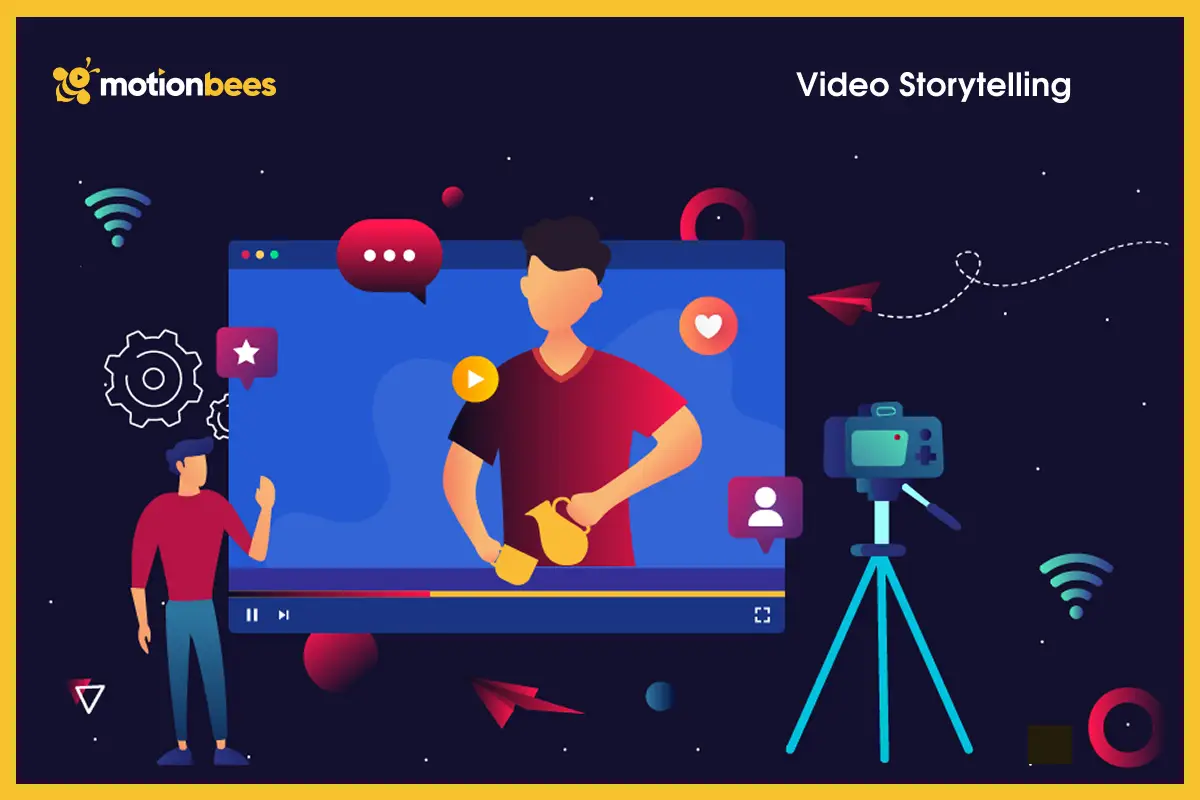
Video storytelling is among the best visual storytelling examples. It is one of those visual storytelling techniques that uses sound, image, and motion to tell a story.
These visual media examples give the audience a great viewing experience. It increases the connection of the audience to the messages. More so, it improves the retention of the messages.
This is done through videos. Also, the feelings, movements, and nuances conveyed via videos are something that images can’t do.
This is why video storytelling is one of the best ways to attract and motivate people.
A video could be brand video content, a mini documentary, visual journalism, or any other video, for that matter. The point is telling a story via video.
Photographs
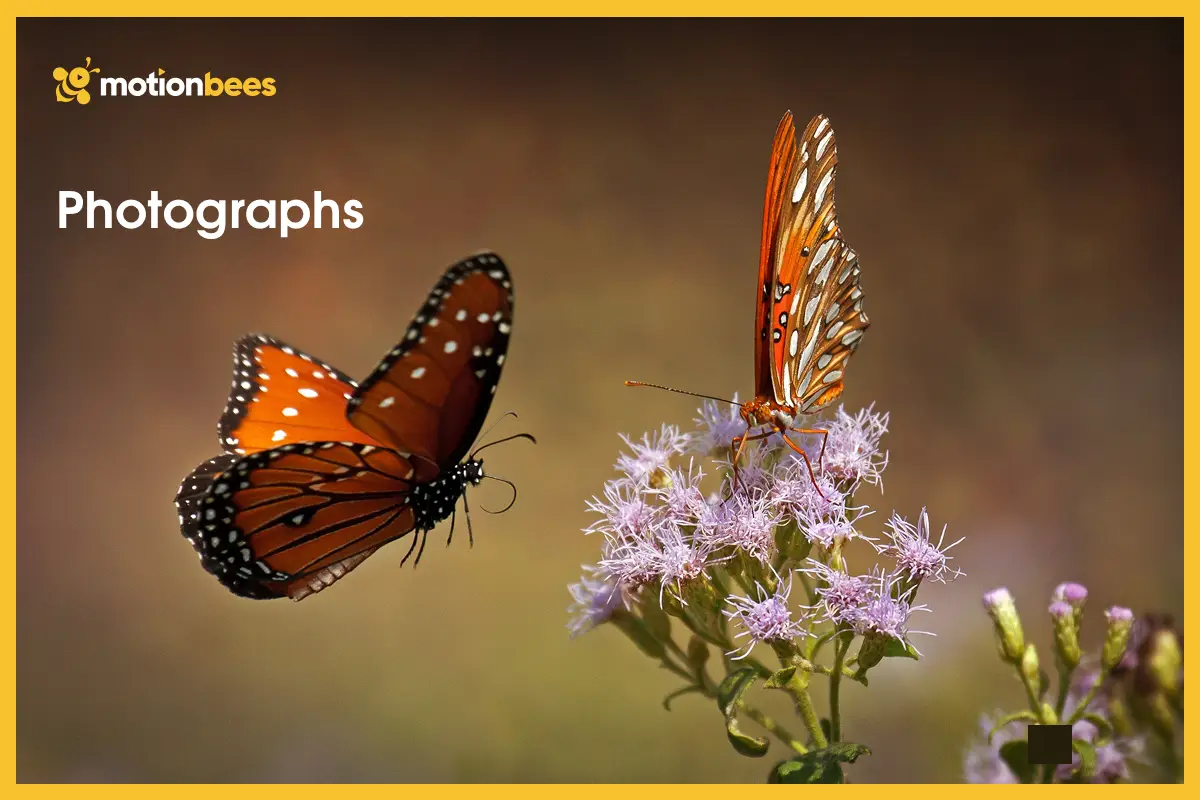
Photos capture moments and feelings in one single picture. A good photo can paint the whole picture and narrate a story right away just by its presence.
Visual storytelling photography can reveal a sea of emotions. It can showcase the feeling of happiness, grief, victory, or even defeat, for that matter. Storytelling images transform tales into story content that is accessible and real.
Therefore, that’s the reason why so many people use photo story examples. This form of storytelling is used mainly in ads, magazines, and social media to engage the viewers.
Illustrations
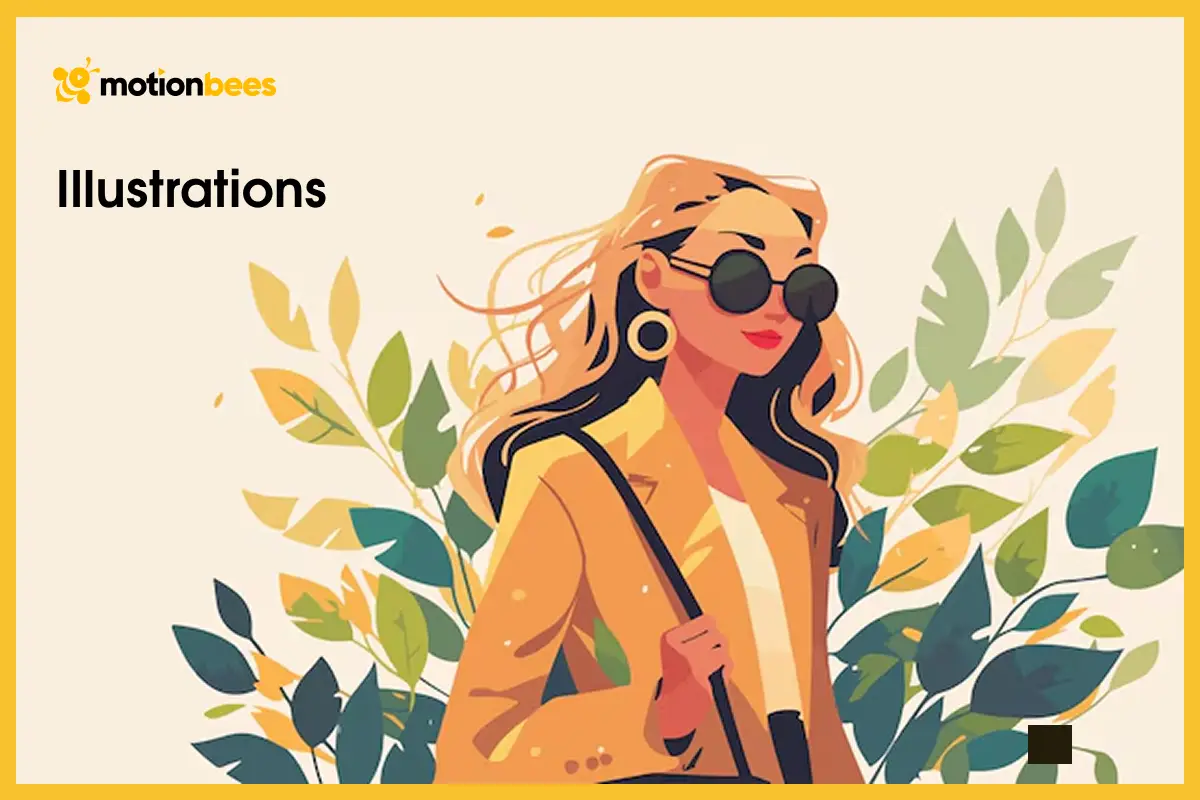
Illustrations allow creators to show the world, characters, and scenes in a way they envision them.
These storytelling techniques examples are ideal for the narratives that are a product of imagination. It is great for showcasing things that are not part of the real world.
Illustrations can show even the most intricate concepts in a manner that is easy to understand.
More so, they do so in a creative manner. They are among those visual storytelling examples that keep the audience engaged. It also helps them understand the message well.
Timeline
A timeline is an excellent way to visually show the changes of a certain thing over a period of time. It sorts the events in a straight way. This way, the viewers can understand the narrative in its order.
Timelines help in explaining the information. More so, they help understand the historical, developmental, or official explanations. They take detailed information and present it through a clean and visual flow.
Get Started With Motionbees to Tell Your Story With Animations
It is no secret that people want to convey their story in a fun and creative way. And for that, animations are the best pick for visual presentation examples.
So when it comes to making animations for storytelling, there is no better agency than Motionbees.
We offer the best Animation Services. Our team turns your ideas into animations that people like to see.
More so, we help you tell your story with great visual storytelling examples. And we will tell it just the way you want it to be told.
Motionbees will create narration videos that will resonate with your audience.
Choosing Motionbees means you will have a partner who will give corporate storytelling examples. These videos will look good, express your thoughts, and convey your story.
So, partner with Motionbees and let us create the animation style that paints the whole picture via business storytelling examples.
Final Thoughts
So, there you have it, folks, that is it for this blog. We hope that the visual storytelling examples we featured in this blog can inspire you to tell your story via visuals. As you know, visual storytelling examples are the best way to share ideas. They make connections between people and make messages memorable. And in this world, having good visual storytelling examples is a must if you want people to see you.
The nice part is that people can easily start using visuals as storytelling examples. And if you need help in telling your story with visuals, then you can choose Motionbees to create animations for storytelling. We have set the standard for what is a visual storyteller and will help you create stories that are simple, significant, and genuine to your message. Great stories indeed begin with great visuals.

Sultan Hanif is a seasoned wordsmith, who brings technology trends and innovations to life through his words. A tech-savvy gamer with a passion for all things football, Sultan blends his technical knowledge with creative storytelling to empower businesses and individuals alike.
